Tech Giants Envision Future Beyond Smartphones
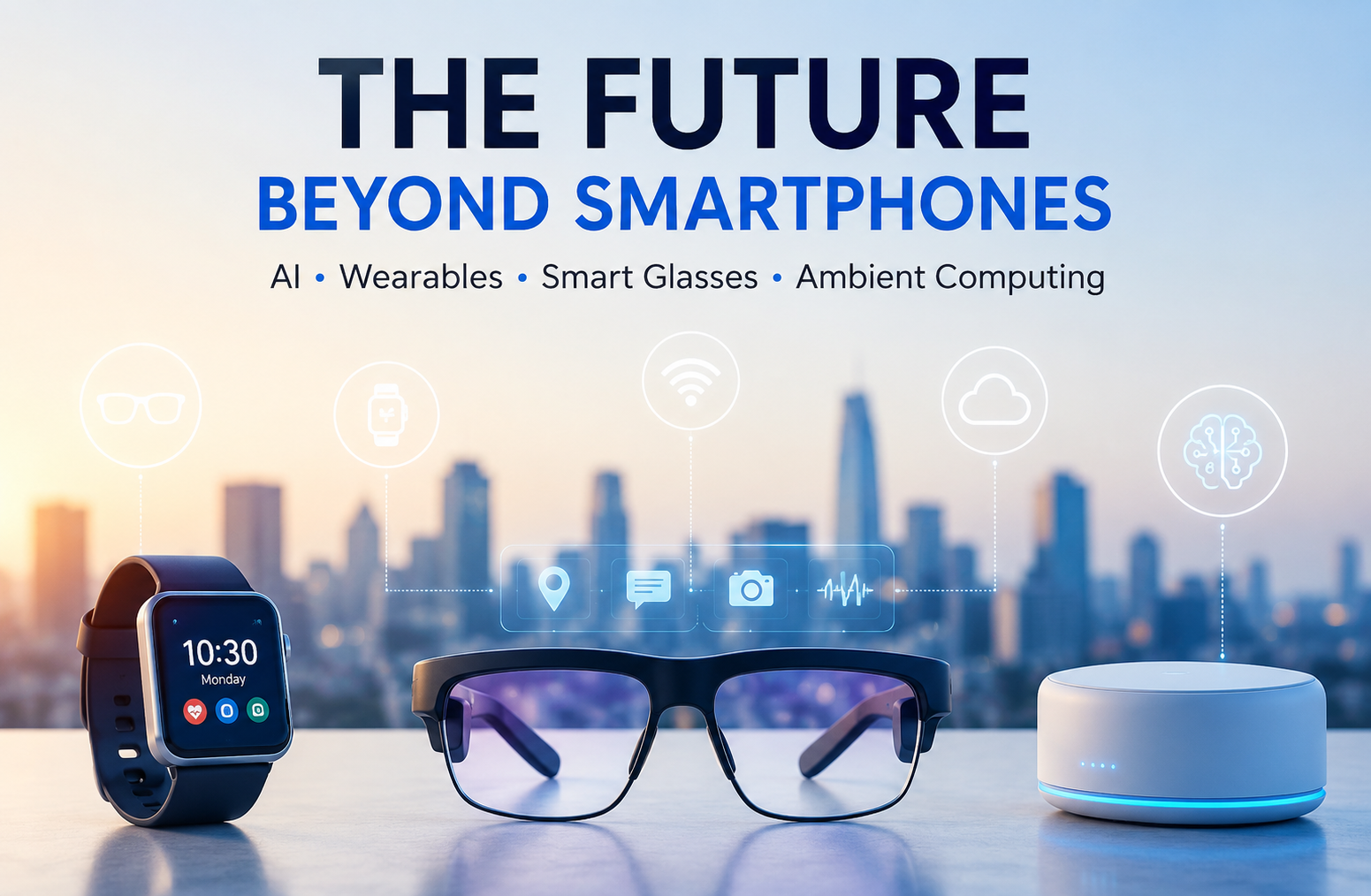
Smartphones have dominated the technology landscape for nearly two decades, transforming how people communicate, work, shop, learn, and entertain themselves. Yet a growing shift is underway. Today, tech giants envision future beyond smartphones as advancements in artificial intelligence, wearable computing, augmented reality, mixed reality, ambient computing, and connected ecosystems begin to redefine human interaction with technology.
The idea is no longer science fiction. Major technology companies are investing billions of dollars into developing new computing platforms that could eventually reduce dependence on traditional smartphones. While smartphones remain essential today, industry leaders increasingly view them as a transitional technology rather than the final destination of personal computing.
This article explores why leading technology companies are looking beyond smartphones, what technologies may replace them, the benefits and challenges involved, and what consumers can expect in the coming years.
Understanding the Shift Beyond Smartphones
For many years, smartphones represented the pinnacle of personal technology. Each new generation delivered faster processors, better cameras, improved displays, and enhanced connectivity. However, innovation within smartphones has gradually become more incremental.
Many consumers now hold onto their devices longer because annual upgrades often provide limited practical differences. At the same time, emerging technologies are creating opportunities for entirely new ways of interacting with digital information.
As a result, technology leaders are exploring platforms that can provide:
- More natural user experiences
- Greater integration with artificial intelligence
- Hands-free interactions
- Improved productivity
- Enhanced accessibility
- Seamless digital and physical world integration
This transition is not about eliminating smartphones overnight. Instead, it involves creating technologies that gradually assume many of the functions currently performed by smartphones.
Why Tech Giants Are Looking Beyond Smartphones
Several powerful factors are driving this transformation.
Market Saturation
The global smartphone market has matured significantly. Most consumers already own capable devices, limiting opportunities for explosive growth.
As markets become saturated, companies must identify new categories capable of generating long-term growth and innovation.
Artificial Intelligence Evolution
Artificial intelligence is rapidly changing how people interact with technology. Traditional smartphone interfaces rely heavily on apps, menus, and touchscreens.
AI-powered systems can increasingly understand natural language, anticipate needs, and provide proactive assistance.
Future computing platforms may require fewer screens and more conversational interactions.
Demand for Frictionless Experiences
Users increasingly expect technology to disappear into the background rather than demand constant attention.
People want information delivered naturally without repeatedly unlocking devices, opening applications, and navigating interfaces.
This demand encourages the development of ambient computing systems that operate seamlessly within daily life.
Advancements in Wearable Technology
Wearables continue becoming more powerful, lightweight, and practical.
Smart glasses, smart watches, health monitoring devices, and AI-powered accessories are demonstrating how technology can move beyond handheld devices.
New Revenue Opportunities
Emerging computing platforms create entirely new markets.
Technology companies recognize that whoever defines the next major computing platform could influence consumer behavior for decades, similar to how smartphone manufacturers shaped the modern digital economy.
The Technologies Driving the Post Smartphone Era
The future envisioned by technology leaders involves multiple interconnected technologies rather than a single replacement device.
Smart Glasses
Smart glasses are among the most frequently discussed smartphone alternatives.
Unlike smartphones, smart glasses allow users to access information while maintaining awareness of their surroundings.
Potential capabilities include:
- Real-time navigation
- Instant language translation
- Visual search functionality
- Contextual information overlays
- Video communication
- AI-powered assistance
Instead of looking down at a screen, users could receive information directly within their field of vision.
Augmented Reality
Augmented reality overlays digital information onto the physical world.
This technology could fundamentally change how people work, shop, travel, learn, and communicate.
Imagine walking through a city while receiving navigation cues directly on the road ahead or viewing product information instantly while shopping.
Augmented reality has the potential to reduce dependence on traditional smartphone displays.
Mixed Reality
Mixed reality combines physical and digital environments into a unified experience.
Unlike basic augmented reality, mixed reality allows digital objects to interact with the real world in sophisticated ways.
Applications may include:
- Virtual workspaces
- Collaborative design environments
- Advanced training simulations
- Interactive education
- Remote collaboration
As hardware improves, mixed reality may become a major computing platform.
AI Wearables
Artificial intelligence wearables represent another emerging category.
These devices focus on intelligent assistance rather than traditional app-based experiences.
Examples include:
- Voice-first assistants
- Context-aware companions
- Personalized productivity tools
- Real-time information providers
The goal is to create technology that proactively helps users rather than requiring constant manual interaction.
Brain Computer Interfaces
Although still in relatively early stages, brain computer interfaces are attracting substantial attention.
These systems aim to enable direct communication between the human brain and digital devices.
Potential future applications include:
- Accessibility improvements
- Faster communication
- Advanced medical treatments
- Enhanced human-computer interaction
While widespread consumer adoption remains years away, research continues advancing rapidly.
How Artificial Intelligence Changes Everything
Artificial intelligence may ultimately become the most important factor driving the transition beyond smartphones.
Traditional computing relies on users actively seeking information.
AI shifts this model by enabling systems to:
- Understand context
- Predict needs
- Automate tasks
- Personalize experiences
- Provide proactive recommendations
Instead of opening an application to check information, future systems may automatically deliver relevant insights when needed.
For example, an AI assistant could:
- Remind users about upcoming appointments
- Suggest alternative travel routes
- Translate conversations instantly
- Summarize important messages
- Coordinate daily schedules
Such capabilities reduce reliance on traditional smartphone interfaces.
Tech Giants Envision Future Beyond Smartphones Through Ambient Computing
One of the most significant trends shaping the future is ambient computing.
Ambient computing refers to technology that operates continuously in the background while remaining largely invisible.
Rather than interacting directly with a device, users engage with an interconnected environment.
Characteristics of ambient computing include:
Context Awareness
Systems understand user location, preferences, activities, and goals.
Natural Interaction
Voice, gestures, gaze tracking, and environmental sensors replace many traditional inputs.
Continuous Connectivity
Devices communicate seamlessly across ecosystems.
Personalized Assistance
Experiences adapt dynamically based on individual needs.
The objective is to make technology feel less like a tool and more like an intelligent companion.
Benefits of Moving Beyond Smartphones
The transition toward new computing platforms could offer substantial advantages.
More Natural User Experiences
People naturally communicate through speech, vision, and gestures.
Future technologies aim to align digital interactions with these natural behaviors.
Increased Productivity
Information could become available instantly without interrupting workflows.
Workers may access data while remaining focused on tasks.
Improved Accessibility
Advanced interfaces may help individuals with disabilities interact more effectively with technology.
Voice control, eye tracking, and AI assistance could remove many barriers.
Better Health and Well Being
Reducing screen dependence may alleviate some issues associated with excessive smartphone use.
Potential benefits include:
- Reduced screen time
- Better posture
- Improved attention management
- Lower digital fatigue
Enhanced Real World Engagement
Future technologies aim to integrate digital information into real-world experiences rather than drawing users away from them.
Industries Most Likely to Be Transformed
The shift beyond smartphones could impact nearly every industry.
Healthcare
Healthcare providers may use wearable devices for continuous monitoring and diagnostics.
Patients could receive real-time health insights without actively checking applications.
Education
Students may experience immersive learning environments that combine digital content with physical surroundings.
Complex subjects could become more interactive and engaging.
Retail
Retail experiences could become highly personalized through augmented reality and AI assistance.
Customers may access product information instantly while shopping.
Manufacturing
Workers could receive visual instructions directly within their field of view.
This may improve efficiency and reduce errors.
Transportation
Navigation systems could become fully integrated into wearable devices and vehicle ecosystems.
Drivers and pedestrians may receive safer, more intuitive guidance.
Major Challenges Facing the Post Smartphone Future
Despite exciting possibilities, significant obstacles remain.
Privacy Concerns
Many future technologies rely heavily on data collection.
Users may worry about:
- Location tracking
- Visual recording
- Behavioral monitoring
- Biometric data collection
Addressing privacy concerns will be essential for widespread adoption.
Security Risks
Connected ecosystems create additional attack surfaces for cybercriminals.
Strong security frameworks must accompany future innovations.
Hardware Limitations
Current wearable devices still face challenges related to:
- Battery life
- Processing power
- Comfort
- Cost
- Durability
Continued engineering advancements are necessary.
Social Acceptance
People must feel comfortable wearing and using new technologies in public settings.
Social acceptance often determines whether innovations achieve mainstream success.
Regulatory Considerations
Governments and regulators will likely play a major role in shaping future technology deployment.
Questions regarding privacy, safety, and ethical AI use remain under active discussion.
What Consumers Can Expect During the Next Decade
The transition beyond smartphones is likely to occur gradually rather than suddenly.
Short Term Outlook
Over the next few years, smartphones will remain central to daily life.
However, users may increasingly rely on:
- Smart watches
- AI assistants
- Smart glasses
- Connected devices
Medium Term Outlook
As hardware improves, wearable devices may handle a growing share of everyday tasks.
Consumers may interact with screens less frequently while relying more on voice and contextual assistance.
Long Term Outlook
In the longer term, entirely new computing paradigms may emerge.
Technology could become deeply integrated into environments, clothing, vehicles, workplaces, and homes.
The smartphone may evolve into a supporting device rather than the primary computing hub.
Will Smartphones Actually Disappear?
A common question involves whether smartphones will completely disappear.
The most realistic answer is that smartphones are unlikely to vanish in the near future.
History shows that new technologies often coexist with older ones rather than replacing them immediately.
For example:
- Television did not eliminate radio.
- Streaming did not instantly eliminate traditional broadcasting.
- Laptops did not eliminate desktop computers.
Similarly, future technologies will probably complement smartphones before gradually reducing their importance.
Many experts believe smartphones will continue evolving while sharing responsibilities with wearable and AI-driven systems.
Consumer Preparation for the Future
Individuals interested in staying ahead of technological changes can begin preparing today.
Consider:
Learning About AI
Understanding artificial intelligence will become increasingly valuable.
Exploring Wearable Technology
Experimenting with smart watches and emerging wearables provides insight into future trends.
Prioritizing Digital Literacy
Technology users should understand privacy, security, and responsible data management practices.
Staying Informed
Following industry developments helps consumers make better decisions regarding new technologies.
Adapting to New Interaction Models
Voice interfaces, gesture controls, and AI assistants are becoming increasingly important skills.
Frequently Asked Questions
What does tech giants envision future beyond smartphones mean?
It refers to major technology companies developing new computing platforms such as AI wearables, smart glasses, augmented reality devices, and ambient computing systems that may reduce reliance on smartphones.
Will smartphones become obsolete?
Not immediately. Smartphones are expected to remain important for many years while newer technologies gradually assume some of their functions.
What technology could replace smartphones?
Potential alternatives include smart glasses, augmented reality systems, AI wearables, mixed reality devices, and advanced ambient computing environments.
Why are technology companies investing heavily in wearables?
Wearables offer more natural, hands-free interactions and may create entirely new computing experiences beyond traditional smartphone screens.
How does artificial intelligence contribute to the post smartphone future?
AI enables contextual assistance, predictive services, automation, and natural language interactions that reduce dependence on traditional app-based interfaces.
What is ambient computing?
Ambient computing refers to technology that operates seamlessly in the background, providing assistance through connected devices and intelligent environments without requiring constant direct interaction.
Conclusion
The concept that tech giants envision future beyond smartphones is rapidly moving from speculation to reality. Advances in artificial intelligence, wearable computing, augmented reality, mixed reality, and ambient computing are creating entirely new possibilities for human-computer interaction.
Rather than relying exclusively on handheld screens, future users may engage with technology through intelligent assistants, connected environments, wearable devices, and immersive digital experiences. While smartphones are unlikely to disappear anytime soon, their role may gradually shift as newer platforms become more capable and accessible.
The coming decade will likely be defined not by a single replacement for the smartphone, but by an ecosystem of technologies working together to create more natural, personalized, and efficient digital experiences. Understanding these trends today provides valuable insight into how technology, work, communication, and everyday life may evolve in the years ahead.