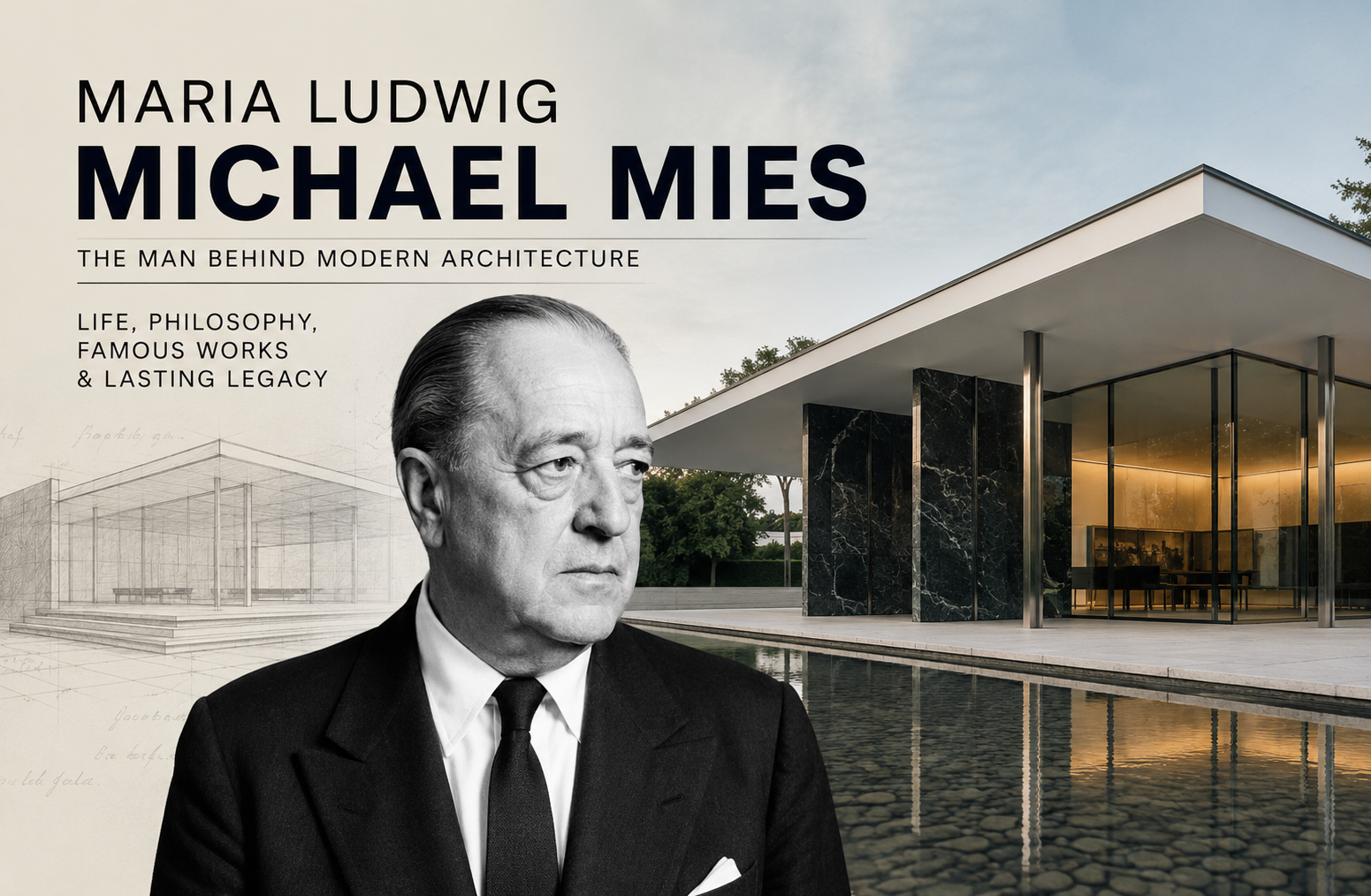
Maria Ludwig Michael Mies: The Man Behind Modern Architecture
Maria Ludwig Michael Mies is a name that often surprises people exploring the history of architecture. While most people know Ludwig Mies van der Rohe as one of the pioneers of modern architecture, fewer realize that his birth name was Maria Ludwig Michael Mies. Understanding this original name provides valuable insight into the life, career, and legacy of a designer whose influence continues to shape cities around the world.
Architecture is more than the creation of buildings. It reflects cultural values, technological progress, and changing ideas about how people live and work. Maria Ludwig Michael Mies helped redefine these ideas through a design philosophy centered on simplicity, functionality, and structural clarity. His work transformed architectural thinking and established principles that remain relevant more than a century later.
For students, architects, historians, and design enthusiasts, learning about Maria Ludwig Michael Mies offers a deeper understanding of modern architecture and the foundations of many contemporary design practices.
Maria Ludwig Michael Mies and His Early Life
Maria Ludwig Michael Mies was born on March 27, 1886, in Aachen, Germany. He grew up in a family involved in stone masonry and construction. His father operated a stoneworking business, giving young Mies firsthand exposure to craftsmanship, building materials, and construction techniques.
Unlike many architects who followed traditional academic paths from an early age, Mies developed practical knowledge through direct experience. Working with stone taught him the importance of precision, durability, and material quality. These lessons would later become central elements of his architectural philosophy.
During his youth, Germany was experiencing rapid industrial growth. New technologies and materials were changing how buildings could be designed and constructed. This environment helped shape his interest in innovation and modern design approaches.
His early experiences created a strong foundation for what would become one of the most influential careers in architectural history.
The Transformation into Ludwig Mies van der Rohe
As his professional career developed, Maria Ludwig Michael Mies adopted the name Ludwig Mies van der Rohe. This change reflected both personal and professional ambitions.
The addition of “van der Rohe” incorporated his mother’s family name and helped establish a distinctive professional identity. Over time, this name became recognized worldwide as a symbol of modern architectural excellence.
The transformation was not merely about branding. It coincided with his emergence as a leading figure in architectural innovation. His work began attracting attention for its unique combination of simplicity, elegance, and structural honesty.
Today, the name Ludwig Mies van der Rohe is synonymous with modern architecture, but understanding his origins as Maria Ludwig Michael Mies provides important context for appreciating his journey and achievements.
The Architectural World Before Mies
To understand the significance of his contributions, it is helpful to examine the architectural landscape before his rise to prominence.
During the late nineteenth and early twentieth centuries, architecture was often characterized by elaborate ornamentation and historical references. Many buildings borrowed heavily from classical, Gothic, Renaissance, and Baroque traditions.
Common features included:
- Decorative facades
- Complex detailing
- Heavy ornamentation
- Historical imitation
- Formal symmetry
While these styles produced many beautiful structures, some architects believed architecture needed to evolve to reflect modern society.
Industrialization introduced new materials such as steel, glass, and reinforced concrete. These innovations created opportunities for entirely new forms of design. Maria Ludwig Michael Mies became one of the architects who embraced these possibilities and helped create a new architectural language.
Influences That Shaped His Thinking
Every influential architect is shaped by experiences, mentors, and cultural movements. Several key influences contributed to Mies’s development.
Craftsmanship and Construction
His background in stone masonry taught him respect for materials and structural integrity.
Industrial Innovation
The rise of modern manufacturing inspired him to explore how industrial materials could be incorporated into architecture.
European Modernism
Emerging modernist ideas encouraged architects to move beyond historical imitation and create designs suited to contemporary life.
Professional Experience
Working with respected architects exposed him to innovative concepts that expanded his understanding of design and construction.
These influences combined to form a philosophy that would later transform architecture worldwide.
The Philosophy of Simplicity
One of the most famous ideas associated with Mies is the phrase:
“Less is more.”
Although widely quoted, this principle is often misunderstood.
For Mies, simplicity did not mean removing value or creativity from architecture. Instead, it meant focusing on what truly mattered.
His approach emphasized:
- Essential design elements
- Functional efficiency
- Structural clarity
- Material honesty
- Visual harmony
Rather than hiding structural components behind decoration, he believed buildings should express their construction openly and honestly.
This philosophy became a cornerstone of modern architecture and continues to influence designers across multiple disciplines.
The Rise of Modern Architecture
Modern architecture emerged as a response to changing social, technological, and economic conditions.
Architects sought solutions that reflected modern life rather than relying on historical styles. Maria Ludwig Michael Mies became one of the movement’s most influential leaders because he successfully balanced innovation with elegance.
Key characteristics of modern architecture included:
- Open floor plans
- Minimal ornamentation
- Large glass surfaces
- Steel structural systems
- Functional design
- Clean geometric forms
These principles represented a dramatic shift from previous architectural traditions and helped establish a new direction for the profession.
Leadership at the Bauhaus
One of the most important chapters in his career involved the Bauhaus, a highly influential design and architecture school in Germany.
The Bauhaus promoted the integration of art, design, and technology. It encouraged creative experimentation while emphasizing practical applications.
Mies eventually became the institution’s final director.
His leadership reflected many of the values associated with the school:
- Functional design
- Simplicity
- Innovation
- Interdisciplinary collaboration
- Modern construction techniques
Although political circumstances eventually led to the closure of the Bauhaus, its ideas spread internationally and profoundly influenced architecture, design, and education.
Mies played a significant role in preserving and advancing these principles during a critical period in history.
Moving to the United States
The next major phase of his career began when he moved to the United States.
This transition expanded his influence significantly.
In America, he found opportunities to apply his architectural philosophy on a larger scale. He became involved in architectural education and helped shape the development of future generations of designers.
His work during this period demonstrated how modern architecture could be adapted to urban environments, educational institutions, and commercial developments.
Many of his most celebrated projects were completed after this move.
Landmark Projects That Changed Architecture
Several projects stand out as defining achievements in his career.
Barcelona Pavilion
The Barcelona Pavilion remains one of the most influential examples of modern architecture.
The building demonstrated how simplicity and carefully selected materials could create a powerful architectural experience.
Key characteristics include:
- Open spatial planning
- Minimal structural elements
- Luxurious materials
- Strong visual balance
Architects continue to study the pavilion because of its innovative approach to space and form.
Farnsworth House
The Farnsworth House is one of the most recognized residential designs in architectural history.
The house reflects many of Mies’s core principles:
- Transparency
- Simplicity
- Structural clarity
- Connection with nature
Its extensive use of glass creates a seamless relationship between interior and exterior spaces.
Seagram Building
The Seagram Building transformed skyscraper design and established standards that influenced countless office towers around the world.
Its significance lies in:
- Elegant proportions
- Structural expression
- Refined detailing
- Urban integration
Many contemporary high rise buildings still reflect ideas first demonstrated in this project.
Crown Hall
Crown Hall is widely regarded as one of the finest educational buildings ever constructed.
The design showcases:
- Large open interiors
- Flexible space planning
- Structural innovation
- Architectural clarity
It remains a landmark example of modern design excellence.
Why His Work Continues to Matter
Many architectural trends eventually lose relevance. The work of Maria Ludwig Michael Mies has remained influential because it is grounded in enduring principles.
Several factors explain its continued importance.
Timeless Appearance
Simple forms tend to age more gracefully than highly decorative styles.
Functional Efficiency
His designs prioritize practical use and adaptability.
Structural Honesty
Buildings clearly express how they are constructed.
Design Flexibility
Open layouts can accommodate changing needs over time.
Universal Appeal
Minimalist design often transcends cultural and stylistic boundaries.
These qualities help explain why his work remains admired decades after its creation.
Benefits of Studying His Approach
Architects, designers, and students can gain valuable insights from his methods.
Better Design Decisions
His work demonstrates how simplicity can strengthen architectural outcomes.
Improved Space Planning
Open floor plans encourage flexibility and usability.
Greater Appreciation for Materials
His designs highlight the importance of selecting and understanding materials.
Long Term Relevance
Timeless principles often provide greater value than temporary trends.
Stronger Visual Clarity
Clear design concepts help create more coherent and effective buildings.
These lessons remain applicable in contemporary architectural practice.
Challenges and Criticisms
Despite widespread admiration, his work has also been criticized.
Perceived Lack of Warmth
Some critics argue that minimalist buildings can feel impersonal.
Construction Costs
High quality materials and precise detailing may increase expenses.
Environmental Concerns
Extensive glass surfaces can create energy performance challenges if not carefully managed.
Human Experience Questions
Some observers believe certain modernist designs prioritize abstraction over emotional engagement.
These critiques contribute to ongoing discussions about architectural values and priorities.
Influence on Contemporary Architecture
The impact of Maria Ludwig Michael Mies extends far beyond his own projects.
His ideas continue to shape:
- Commercial architecture
- Residential design
- Urban planning
- Educational facilities
- Interior design
- Corporate headquarters
Many contemporary buildings incorporate principles he helped popularize, including transparency, minimalism, and structural expression.
Even architects who pursue different styles often engage with concepts that originated from his work.
Lessons for Modern Designers
The principles developed by Mies remain highly relevant today.
Focus on Essentials
Remove unnecessary complexity whenever possible.
Prioritize Function
Design should effectively solve real problems.
Respect Materials
Allow materials to express their natural qualities.
Embrace Precision
Attention to detail contributes significantly to quality.
Create Adaptable Spaces
Flexibility improves long term usability.
These lessons can benefit architects, interior designers, planners, and creative professionals across many industries.
The Lasting Legacy of Maria Ludwig Michael Mies
Few architects have influenced the built environment as profoundly as Mies.
His legacy includes:
- Defining modern architectural principles
- Advancing minimalist design
- Transforming architectural education
- Influencing generations of architects
- Establishing new standards for commercial buildings
- Demonstrating the power of simplicity
His work continues to be studied in universities, admired by professionals, and appreciated by people around the world.
The ideas he championed remain central to discussions about architecture, design, and the future of cities.
Frequently Asked Questions
Who was Maria Ludwig Michael Mies?
Maria Ludwig Michael Mies was the birth name of the architect later known as Ludwig Mies van der Rohe, one of the most influential figures in modern architecture.
Why is he important in architectural history?
He helped define modern architecture through his emphasis on simplicity, functionality, and structural honesty.
What is the meaning of “less is more”?
The phrase reflects his belief that removing unnecessary elements can create stronger and more effective designs.
What are his most famous buildings?
Some of his best known projects include the Barcelona Pavilion, Farnsworth House, Seagram Building, and Crown Hall.
What architectural style is he associated with?
He is most closely associated with Modernism and the International Style.
Why do architects still study his work today?
His principles of simplicity, functionality, and timeless design continue to influence contemporary architecture around the world.
Conclusion
The story of Maria Ludwig Michael Mies is a remarkable journey from a young craftsman in Germany to one of the most influential architects in modern history. His commitment to simplicity, precision, and functional design reshaped architecture and established principles that remain relevant today.
Through iconic projects, educational leadership, and groundbreaking ideas, he helped create a new architectural language that continues to shape buildings across the globe. Understanding his life and work provides valuable insight into the evolution of modern architecture and the enduring power of thoughtful design.