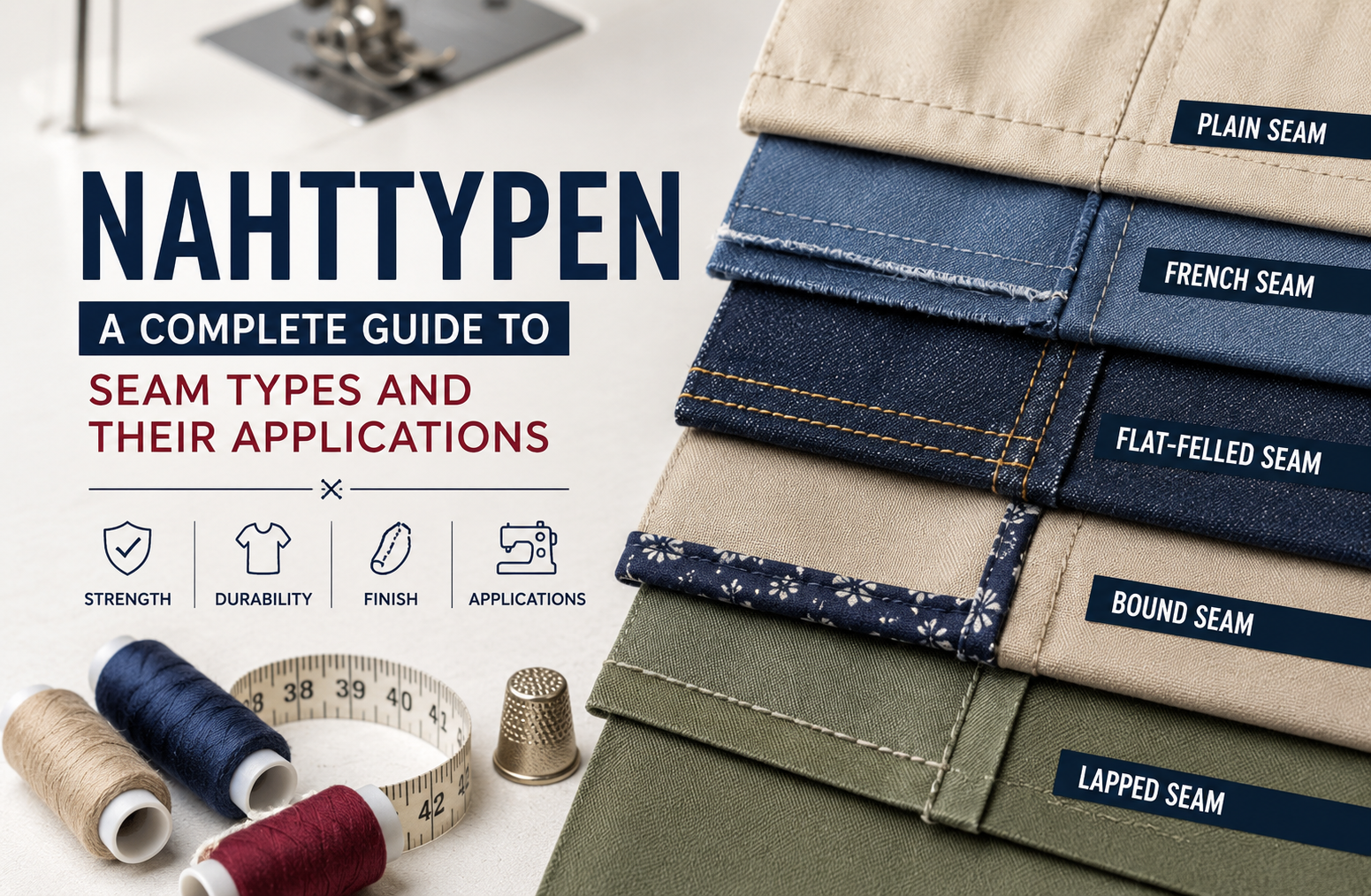
Nahttypen: A Complete Guide to Seam Types and Their Applications
When working with textiles, garments, upholstery, technical fabrics, or industrial sewing projects, understanding nahttypen is essential. Different seam types influence durability, appearance, flexibility, comfort, and overall product quality. Whether you are a beginner learning sewing fundamentals or a professional involved in garment production, knowing how various seams function helps you choose the most effective construction method for every project.
The concept of nahttypen extends beyond simply joining two pieces of fabric together. Each seam serves a specific purpose. Some provide exceptional strength for workwear, while others create decorative effects for fashion garments. Certain seam structures reduce bulk, whereas others improve comfort against the skin.
This comprehensive guide explores the different categories of seams, their characteristics, advantages, disadvantages, and practical applications across fashion, home textiles, and industrial manufacturing.
What Are Nahttypen?
The German term nahttypen translates to “types of seams” in English. In sewing and textile manufacturing, seam types refer to the methods used to join fabric pieces together using stitching techniques.
A seam is much more than a line of stitches. It determines:
- Garment durability
- Fit and shape retention
- Resistance to wear and tear
- Production efficiency
- Comfort during use
- Visual appearance
- Fabric stability
The selection of the correct seam type depends on factors such as fabric weight, intended use, design requirements, and manufacturing processes.
Why Seam Selection Matters
Many people focus primarily on fabric quality when evaluating clothing or textile products. However, experienced sewing professionals know that seam construction often determines how long a product lasts.
A poorly chosen seam may result in:
- Fabric fraying
- Seam failure
- Reduced comfort
- Unattractive appearance
- Increased production costs
A well-designed seam can:
- Improve durability
- Enhance garment appearance
- Reduce fabric waste
- Increase wearer comfort
- Simplify maintenance
This is why professional pattern makers and textile engineers devote significant attention to selecting appropriate nahttypen during product development.
The Main Categories of Nahttypen
Most seam classifications fall into several major categories. Each category serves different construction goals.
Plain Seam
The plain seam is the most common seam used in garment manufacturing.
It is created by placing two fabric pieces together with their right sides facing and stitching along the seam line. The seam allowance is then pressed open or to one side.
Advantages
- Easy to create
- Suitable for most fabrics
- Fast production process
- Minimal skill requirements
Disadvantages
- Raw edges may fray
- May require additional finishing
- Less durable than specialized seams
Common Applications
- Shirts
- Dresses
- Skirts
- Trousers
- Home textiles
Because of its simplicity, the plain seam remains one of the most widely used nahttypen in both home sewing and industrial production.
French Seam
A French seam encloses raw fabric edges inside the seam itself.
This creates a clean and professional finish that looks attractive from both sides.
Advantages
- Elegant appearance
- Prevents fraying
- Ideal for lightweight fabrics
- Strong construction
Disadvantages
- More time-consuming
- Not suitable for bulky materials
Common Applications
- Luxury garments
- Lingerie
- Silk blouses
- Sheer fabrics
French seams are especially valued in premium fashion where internal garment appearance matters almost as much as the exterior.
Flat-Felled Seam
The flat-felled seam is known for exceptional strength and durability.
It encloses raw edges completely while creating a flat finish against the fabric surface.
Advantages
- Extremely durable
- Clean finish
- Resistant to fraying
- Comfortable against the skin
Disadvantages
- Requires additional sewing steps
- Adds some bulk
Common Applications
- Jeans
- Workwear
- Sportswear
- Uniforms
Many high-quality denim garments rely on this seam construction because it withstands repeated stress and washing.
Bound Seam
A bound seam uses binding material to cover raw edges.
The binding can be made from the same fabric or a contrasting material.
Advantages
- Decorative appearance
- Strong edge protection
- Professional finish
Disadvantages
- Requires extra materials
- More complex construction
Common Applications
- Jackets
- Unlined garments
- Premium fashion pieces
Lapped Seam
A lapped seam is formed by overlapping one fabric edge over another before stitching.
Unlike traditional seams, the fabric pieces are not placed right sides together.
Advantages
- Strong construction
- Decorative possibilities
- Suitable for thick fabrics
Disadvantages
- Visible stitching
- Can add bulk
Common Applications
- Leather products
- Technical textiles
- Outdoor equipment
Nahttypen Used in Industrial Manufacturing
Industrial textile production often requires specialized seam constructions designed for performance and efficiency.
Safety Seam
A safety seam combines two stitch types in a single operation.
It is commonly produced using industrial overlock machinery.
Benefits
- High production speed
- Strong seam integrity
- Reduced fraying
Applications
- Mass-produced garments
- Knitwear
- Casual clothing
Overlock Seam
An overlock seam trims, sews, and finishes fabric edges simultaneously.
Benefits
- Fast production
- Clean edge finishing
- Stretch compatibility
Applications
- T-shirts
- Activewear
- Knit garments
Coverstitch Seam
The coverstitch seam provides stretch and durability while creating a professional finish.
Benefits
- Flexible seam structure
- Attractive appearance
- Excellent recovery
Applications
- Sportswear
- Performance apparel
- Stretch garments
Seam Types for Different Fabrics
Choosing the correct seam often depends on fabric characteristics.
Lightweight Fabrics
Examples include:
- Silk
- Chiffon
- Organza
- Voile
Recommended seams:
- French seam
- Narrow seam
- Bound seam
These options minimize fraying while maintaining a delicate appearance.
Medium Weight Fabrics
Examples include:
- Cotton
- Linen
- Rayon
- Polyester blends
Recommended seams:
- Plain seam
- Safety seam
- Flat-felled seam
These fabrics are versatile and compatible with numerous seam constructions.
Heavy Fabrics
Examples include:
- Denim
- Canvas
- Upholstery fabrics
- Leather
Recommended seams:
- Flat-felled seam
- Lapped seam
- Reinforced seam
Heavy materials require stronger construction methods to withstand stress.
Decorative Nahttypen in Fashion Design
Modern fashion uses seams not only for construction but also as design elements.
Decorative seam placement can create:
- Visual structure
- Body contouring effects
- Unique garment styling
- Luxury detailing
Popular decorative seams include:
Princess Seam
A princess seam shapes garments without requiring darts.
It follows the body’s natural curves and creates a tailored silhouette.
Topstitched Seam
Visible stitching lines add aesthetic appeal while reinforcing construction.
Piped Seam
A narrow cord covered in fabric is inserted into the seam.
This creates a decorative raised edge commonly seen in upholstery and premium garments.
Common Problems Associated With Seam Construction
Even experienced sewing professionals encounter seam-related challenges.
Seam Puckering
Puckering occurs when fabric gathers along the stitch line.
Possible causes include:
- Incorrect tension
- Improper needle selection
- Fabric instability
Seam Slippage
Some fabrics allow yarns to pull away from stitching.
This issue is common with loosely woven materials.
Seam Grinning
Grinning occurs when stitches become visible due to excessive tension on the fabric.
It often appears in tight-fitting garments.
Seam Failure
Complete seam failure results from inadequate construction, poor thread quality, or inappropriate seam selection.
Understanding the strengths and limitations of different nahttypen helps reduce these risks.
How Professionals Choose the Right Seam
Experienced garment developers evaluate multiple factors before selecting a seam type.
Fabric Characteristics
They consider:
- Weight
- Stretch
- Thickness
- Fraying tendency
Product Purpose
A seam suitable for a wedding dress may not work for industrial workwear.
Production Cost
Some seams require additional labor and machinery.
Manufacturers must balance quality with efficiency.
Consumer Expectations
Luxury customers often expect enclosed seams and premium finishing techniques.
Mass-market products may prioritize affordability and speed of production.
The Role of Seam Technology in Modern Textiles
Advancements in textile manufacturing continue to influence seam development.
Innovations include:
- Ultrasonic welding
- Bonded seams
- Laser-assisted joining
- Seam sealing technology
These methods reduce needle perforations and improve water resistance.
Technical apparel manufacturers increasingly use bonded construction in outdoor gear and performance sportswear.
For broader textile engineering research and standards, professionals often consult resources from the Textile Institute.
Sustainable Manufacturing and Seam Selection
Sustainability has become a major focus within the textile industry.
Seam selection can influence environmental impact through:
- Material efficiency
- Product longevity
- Repairability
- Manufacturing energy consumption
Durable seam constructions often extend garment life, reducing the need for replacement.
Many sustainable brands prioritize construction quality because long-lasting garments generate less textile waste.
Practical Tips for Beginners
If you are learning sewing, focus on mastering a few fundamental seam types before moving to advanced techniques.
Start With Basic Construction
Practice:
- Plain seams
- French seams
- Flat-felled seams
These provide a strong foundation for future projects.
Test on Scrap Fabric
Always test seam settings before sewing the final project.
Use Appropriate Needles
Different fabrics require different needle types.
Press as You Sew
Professional-looking results depend heavily on proper pressing between sewing stages.
Prioritize Accuracy
Accurate seam allowances improve fit, appearance, and durability.
Comparing Popular Seam Types
Plain Seam
Best for:
- Everyday garments
Strength:
- Moderate
Difficulty:
- Easy
French Seam
Best for:
- Lightweight fabrics
Strength:
- High
Difficulty:
- Moderate
Flat-Felled Seam
Best for:
- Denim and workwear
Strength:
- Very high
Difficulty:
- Moderate to advanced
Bound Seam
Best for:
- Premium finishing
Strength:
- High
Difficulty:
- Advanced
Lapped Seam
Best for:
- Leather and heavy materials
Strength:
- High
Difficulty:
- Moderate
Frequently Asked Questions
What does nahttypen mean?
Nahttypen is a German term that refers to different types of seams used in sewing, garment construction, and textile manufacturing.
Which seam type is strongest?
Flat-felled seams are generally considered among the strongest seam constructions because they fully enclose raw edges and distribute stress effectively.
Which seam is best for delicate fabrics?
French seams are often the preferred choice for delicate fabrics because they create a clean finish while preventing fraying.
Why are seams important in clothing?
Seams hold fabric pieces together, influence durability, affect comfort, and contribute significantly to a garment’s appearance and longevity.
Are industrial seam types different from home sewing seams?
Many industrial seams use specialized machinery and high-speed production methods, although the underlying construction principles are often similar.
How can I prevent seam failure?
Use the correct seam type, appropriate thread, proper needle selection, and accurate stitching techniques suited to the fabric being used.
Conclusion
Understanding nahttypen is fundamental for anyone involved in sewing, fashion design, textile manufacturing, or product development. Seam selection affects far more than simply joining pieces of fabric together. The right seam can improve durability, increase comfort, enhance appearance, and extend product lifespan.
From simple plain seams to advanced industrial constructions, every seam type serves a specific purpose. Professionals evaluate fabric properties, product requirements, manufacturing costs, and customer expectations before choosing the most suitable option. As textile technology continues to evolve, seam construction remains one of the most important elements of quality craftsmanship.